What Are the Core Components of a Successful Digital Marketing Strategy? (2026 Guide)

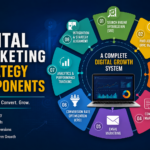
In today’s competitive online world, Contemplating digital marketing strategy components is crucial for establishing a powerful online visibility. Every successful business applies a combination of SEO, content marketing, paid advertising, and social media to increase traffic and generate leads. Without a proper framework, marketing efforts become disorganized and ineffective. Learning how these systems perform together is necessary for long-term growth.

A well-planned approach not only enhances visibility but also lets businesses target the correct audience, lowers marketing costs, and enhances conversions. In 2026, companies that do not focus on structured marketing strategies face difficulties in the digital arena.

1. Search Engine Optimization (SEO)

SEO is the backbone of online presence. It assists websites rank higher on search engines like Google and appeal organic traffic without spending for ads.

A powerful SEO strategy involves the following:

  • Keyword research and optimization
  • Technical SEO enhancements
  • Top-notch backlink building
  • Content optimization for users and search engines

Businesses that spend in professional SEO services for best Google rankings usually see long-term growth because SEO constantly brings traffic even just when content is published.

SEO is not only about ranking-it is regarding creating credibility, authority, and brand presence in your particular niche.

2. Paid Advertising (PPC Marketing)

Paid advertising is the quickest approach to generate traffic and leads. Unlike SEO, which consumes time, PPC campaigns convey quickest outcomes when accurately optimized.

Popular platforms such as Google Ads, YouTube Ads, and social media ads.

Before spending in paid campaigns, businesses usually contrast organic and paid strategies. Analyzing SEO vs. paid ads for business growth assists firms in making the best decisions about budget allocation and marketing priorities.

When handled accurately, PPC can deliver maximum ROI and rapid conversions.

3. Social Media Marketing

Social media has become a strongest platform for brand awareness and customer engagement. Platforms such as Facebook, Instagram, LinkedIn, and TikTok enable businesses to associate exactly with their audience

Brands that apply social media marketing strategies for audience growth are capable of creating loyal communities, growing engagement, and strengthening conversions.

Consistency, storytelling, and audience interaction are crucial elements for progress in social media marketing.

4. Content Marketing

Content is the basis of entire digital marketing efforts. By ignoring content, SEO, social media, and advertising cannot work efficiently.

Content marketing includes the following:

  • Blog articles
  • Video content
  • Infographics
  • Case studies
  • Guides and tutorials

Top-notch quality content lets educate users, resolve issues, and create trust. It also lets search engine rankings and backed all other marketing platforms.

Content marketing infographic showing blog articles, video content, infographics, case studies, and guides for digital marketing growth.

5. Email Marketing

Email marketing is one of the most emerging tools for customer retention and lead nurturing. It enables businesses to be connected with their audience and encourage products or services directly.

With automation and segmentation, businesses can send customized messages dependent on user behavior, which grow conversion rates and customer loyalty.

6. Conversion Rate Optimization (CRO)

CRO emphasize on increasing the performance of your website so more visitors turn into actual customers

This includes:

  • Upgrading landing pages
  • Optimizing CTAs (Call-to-Actions)
  • A/B experimenting multiple designs
  • improving user experience

Even tiny improvements in CRO can crucially grow sales and leads without increasing traffic.

7. Analytics and Performance Tracking

One of the most significant parts of a digital strategy is monitoring performance. Without data, businesses cannot direct to their marketing efforts.

Tools such as Google Analytics and Search Console help track:

  • Website traffic
  • User behavior
  • Conversion rates
  • Keyword performance

Data-driven decisions assure best results and long-term success.

8. How All Components Work Together

The actual power of digital marketing strategy components occurs when all platforms are integrated.

For example;

  • SEO brings long-term organic traffic
  • PPC gives instant presence
  • Social media create engagement
  • Content supports every channel
  • Email marketing moves leads into customers

When these components work together, they build a strong and scalable marketing system.

9. Why Businesses Need a Strong Digital Strategy in 2026

In 2026, competition online is growing rapidly. Businesses without a accurate strategy often faces difficulty to survive.

A strong digital marketing system lets businesses:

  • Grow brand presence
  • Generate consistent leads
  • Create customer credibility
  • Improve ROI
  • Scale quicker in competitive markets
Infographic showing why businesses need a strong digital strategy in 2026 including brand growth, lead generation, customer credibility, improved ROI, and business scaling.

Conclusion

A successful online business is built on strong digital marketing strategy components, not a single marketing tactic. When SEO, PPC, content marketing, social media, and email marketing are combined effectively, they create a powerful system that drives consistent growth.

Businesses that understand and implement these components correctly will stay ahead of competitors and achieve long-term success in 2026 and beyond.


FAQs - Digital Marketing Strategy Components

1. What are the main components of a digital marketing strategy?

The main components of a digital marketing strategy include SEO, content marketing, social media marketing, PPC advertising, email marketing, and analytics tracking. These elements work together to improve online visibility and generate leads.

2. Why is SEO important in digital marketing?

SEO helps websites rank higher on Google and attract organic traffic. A strong SEO strategy improves visibility, builds authority, and drives long-term business growth without relying completely on paid ads.

3. How does social media marketing help businesses grow?

Social media marketing helps businesses connect with their audience, increase brand awareness, improve engagement, and generate leads through platforms like Facebook, Instagram, LinkedIn, and TikTok.

4. What is the difference between SEO and PPC?

SEO focuses on organic traffic and long-term growth, while PPC advertising delivers instant traffic through paid campaigns. Both strategies are important for a balanced digital marketing plan.

5. Why are digital marketing strategy components important for businesses?

Digital marketing strategy components help businesses create a structured online marketing system that improves visibility, attracts customers, increases conversions, and supports long-term growth in competitive markets.

Recent Posts

What Are the Core Components of a Successful…

Web Design vs Web Development for Business: What…

Why You Need To Buy SEO Services for…