Search engine optimization continues to transform, but links from reliable websites remain an important part of building online authority. Backlinks for SEO help search engines understand how other websites reference and value your content. However, modern link building is no longer about collecting as many links as possible. Relevance, authority, context, and quality matter much more than quantity.
In 2026, businesses need a smarter approach to link building. A strong backlink profile combined with useful content, technical optimization, and a positive user experience can support better organic visibility and long-term website growth.
What Are Backlinks?
Backlinks are links from one website that point to another website. For example, if an industry publication mentions your business and links to one of your useful guides, your website receives a backlink.
These links can act as signals of credibility and relevance, especially when they come from reputable websites within your industry. A natural backlink profile can also help search engines understand relationships between websites, pages, and topics.
Not every backlink provides the same value. A relevant editorial link from a respected industry website is generally more useful than dozens of links created on low-quality or unrelated websites.
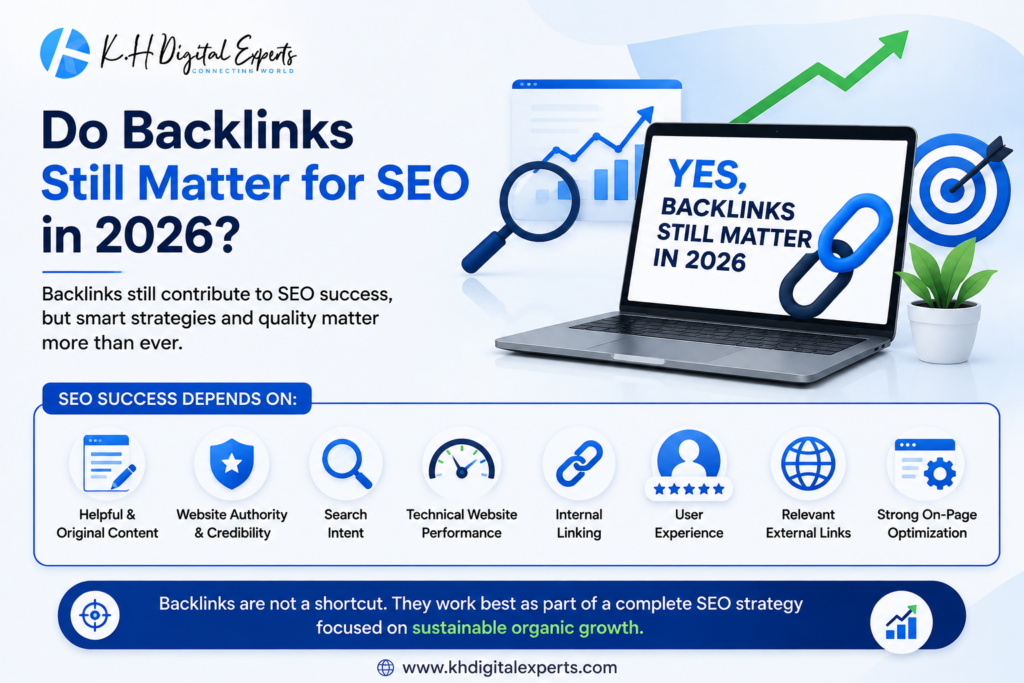
Do Backlinks Still Matter for SEO in 2026?
Yes, backlinks can still contribute to SEO performance, but the way businesses should approach them has changed significantly. Search engines have become much better at identifying manipulative, irrelevant, and spammy link-building practices.
Successful SEO today depends on a combination of factors, including:
- Helpful and original content
- Website authority and credibility
- Search intent
- Technical website performance
- Internal linking
- User experience
- Relevant external links
- Strong on-page optimization
Businesses should therefore avoid treating backlinks as a shortcut to rankings. They work best as part of a complete search engine optimization strategy focused on sustainable organic growth.
What Makes a High-Quality Backlink?
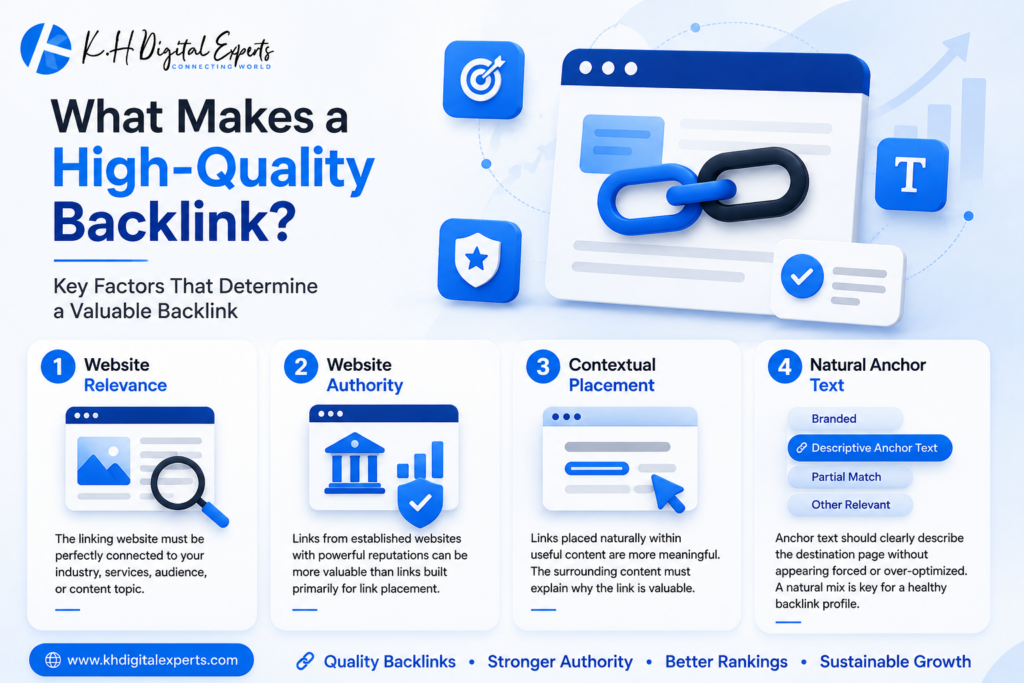
A high-quality backlink is not simply a link from any website. Several factors determine whether a link can be valuable.
1. Website Relevance
The linking website should ideally be connected to your industry, services, audience, or content topic.
For example, a backlink to a digital marketing agency from a respected marketing publication makes contextual sense. A link from a completely unrelated website may offer less meaningful relevance.
2. Website Authority
Links from established websites with strong reputations can be more valuable than links from websites created primarily for link placement.
Before pursuing a backlink opportunity, evaluate the website’s content quality, organic visibility, relevance, and overall credibility.
3. Contextual Placement
Links placed naturally within useful content are generally more meaningful than links hidden in footers, unrelated sidebars, or pages containing hundreds of external links.
The surrounding content should explain why the linked resource is useful to readers.
4. Natural Anchor Text
Anchor text is the clickable text used for a link. It should clearly describe the destination page without looking forced or excessively optimized.
A healthy backlink profile normally contains a natural mix of branded, descriptive, partial-match, and other relevant anchor texts.
High-Quality Backlinks vs Low-Quality Backlinks
The difference between good and bad links is important.
High-quality backlinks typically come from:
- Relevant industry websites
- Trusted publications
- Genuine business websites
- Useful resource pages
- Editorial articles
- Reputable directories
- Original research references
Low-quality links may come from:
- Spam websites
- Automated link networks
- Irrelevant directories
- Low-quality guest-post networks
- Pages created only to sell links
- Sites with thin or duplicated content
Building hundreds of poor links is not a substitute for earning a smaller number of relevant and trustworthy links.
Best Ways to Build Quality Backlinks
Create Link-Worthy Content
One of the most sustainable ways to earn links is to publish something worth referencing.
Examples include:
- Original research
- Industry statistics
- Detailed guides
- Checklists
- Case studies
- Templates
- Infographics
- Expert insights
A comprehensive resource has a better chance of earning natural mentions than content that simply repeats information already available elsewhere.
Use Guest Posting Carefully
Guest posting can support authority and brand exposure when it is focused on genuine publications and valuable content.
Choose websites that have a real audience and are relevant to your industry. Avoid publishing identical or low-quality articles across dozens of websites simply to create links.
Try Broken Link Building
Broken link building involves finding relevant pages that link to resources that no longer exist. You can contact the website owner and recommend your useful content as a suitable replacement when it genuinely matches the original resource.
This strategy provides value to both sides: the publisher fixes a broken link, while your website may earn a relevant backlink.
Earn Links Through Digital PR
Businesses can create newsworthy studies, reports, surveys, expert commentary, or industry insights that journalists and publishers may want to reference.
Digital PR can be particularly effective because it combines brand visibility with opportunities to earn authoritative mentions.
Don't Ignore Technical SEO
Backlinks alone cannot compensate for a website with serious technical problems.
Search engines still need to crawl, understand, and index your pages efficiently. Website owners should regularly review site speed, mobile usability, indexing, broken links, redirects, structured data, and Core Web Vitals.
Following a comprehensive technical SEO checklist can help ensure that your website’s technical foundation supports the authority you build through content and links.
Backlinks vs Paid Advertising
SEO and paid advertising serve different purposes. Paid ads can generate visibility quickly, while organic SEO generally focuses on building sustainable visibility over time.
Link building belongs to the long-term organic side of this strategy. Businesses deciding how to divide their marketing budget should understand the differences between SEO vs paid ads before choosing one channel or combining both.
Why Ecommerce Websites Also Need Authority
Ecommerce SEO is highly competitive because multiple stores may sell similar products and target similar keywords.
Useful category pages, optimized product content, strong technical performance, internal linking, and relevant backlinks can help ecommerce websites strengthen their organic presence.
A complete ecommerce SEO services strategy can combine these elements rather than relying on link building alone.
Common Backlink Building Mistakes to Avoid
Many businesses hurt their SEO efforts by focusing too heavily on link quantity.
Avoid these common mistakes:
- Buying large numbers of spammy links
- Using the same exact-match anchor repeatedly
- Getting links from irrelevant websites
- Participating in obvious link schemes
- Ignoring website quality
- Creating backlinks too aggressively
- Publishing low-value guest posts
- Focusing only on third-party SEO metrics
Instead, prioritize relevance, genuine relationships, valuable content, and long-term authority.
How Backlinks Fit Into a Complete SEO Strategy
Backlinks for SEO should never operate in isolation. A website also needs optimized content, strong internal linking, technical health, clear site architecture, keyword targeting, and a good user experience.
Businesses struggling to generate organic visibility may need to evaluate the complete website rather than simply creating more links. Understanding why businesses invest in professional SEO services can help clarify how content, technical optimization, authority building, and ongoing improvements work together.
FAQs - Backlinks For SEO
1. What are backlinks in SEO?
Backlinks are links from one website to another. They help search engines understand a website’s authority, relevance, and trustworthiness, making them an important part of SEO.
2. Do backlinks still matter for SEO in 2026?
Yes. High-quality, relevant backlinks remain an important Google ranking factor in 2026. They improve website authority and can help increase organic search visibility when combined with quality content and technical SEO.
3. How can I get high-quality backlinks?
You can earn high-quality backlinks by creating valuable content, publishing guest posts on reputable websites, conducting digital PR, building relationships within your industry, and producing resources that others naturally want to reference.
4. What types of backlinks should I avoid?
Avoid buying backlinks, using automated link-building tools, participating in link farms, excessive link exchanges, and getting links from spammy or irrelevant websites. These practices can negatively impact your SEO performance.
5. Are backlinks more important than on-page SEO?
No. Backlinks and on-page SEO work together. A website with strong technical SEO, optimized content, and high-quality backlinks has a better chance of achieving sustainable Google rankings than relying on backlinks alone.
Final Thoughts
Backlinks remain useful in 2026, but quality matters far more than simply accumulating links. Search engines are increasingly focused on relevance, trust, useful content, and genuine authority.
The most effective approach is to earn links through valuable resources, industry relationships, digital PR, reputable publications, and content people genuinely want to reference.
Instead of chasing hundreds of questionable links, focus on building a trustworthy website and earning relevant mentions from credible sources. When combined with technical SEO, useful content, and a strong user experience, backlinks for SEO can support sustainable organic visibility and long-term business growth.
For businesses that want a complete SEO approach, KH Digital Experts can help combine technical optimization, content strategy, link building, and search visibility into a strategy designed for sustainable growth.